

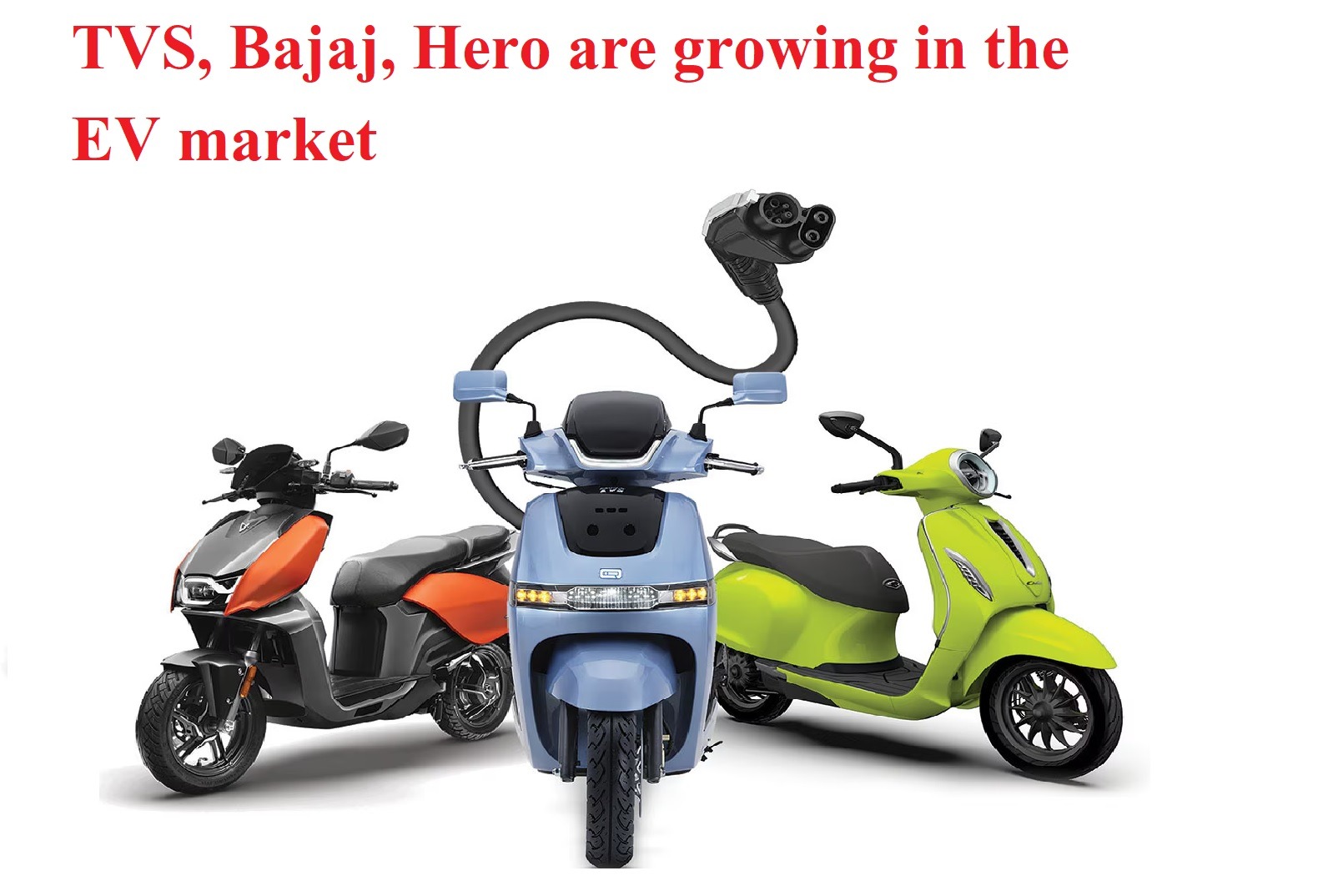
NTI: India’s two-wheeler giants’ journey from internal combustion engines (ICE) to electric vehicles (EVs) was slow. Bajaj and TVS made their cautious forays with the Chetak and iQube in early 2020, while Hero MotoCorp—the largest player by volume—waited until late 2022 to launch its EV, Vida. This sluggish transition led some analysts and industry experts to doubt the traditional two-wheeler giants’ ability to adapt. Meanwhile, early EV adopters like Hero Electric, Okinawa, and Ampere had already secured significant market positions by FY21, capturing nearly 60% of the market by the following fiscal year.
Despite their legacy, companies like Bajaj, TVS, and Hero seemed to struggle initially. By March 2020, two months after their respective launches, the Chetak and iQube had only sold 91 and 18 units. A year later, these numbers had crept up to three-digit figures but still remained modest. Bajaj held a 3% market share, TVS had 4%, and Ola Electric, a newcomer, had claimed 6%. Hero, relying on Ather’s success until Vida’s launch, lagged even further. In the world of EVs, these dominant ICE players were yet to find their footing.
Fast Forward to 2024: The Legacy Players Take Charge
By October 2024, however, the narrative had changed. TVS and Bajaj made strides, with TVS becoming the second-largest EV player, holding a 19% market share in FY24 and surging to 20.26% in September. Bajaj followed closely, becoming the fourth largest with an 11% share in FY24, even overtaking TVS briefly with a 21.47% share in September. Hero, too, has grown rapidly, claiming a 5% share since Vida’s launch in late 2022. Together with Ather, where Hero holds a 39.7% stake, Hero’s effective market presence amounts to 17%.
As Amit Kaushik of Urban Science International notes, “They came, they saw, they kept quiet, and then they captured.” These legacy players, he argues, benefited from years of market understanding and consumer insights, a strategic advantage underestimated by their EV competitors. The ICE players had the patience to wait for the right time and came prepared.
Strategic Patience and Market Savvy
Unlike newer entrants, Bajaj, TVS, and Hero didn’t focus solely on price. Many early EV players had imported cheaper EVs from China, entering the Indian market as “price warriors” with minimal R&D or after-sales service. This approach resulted in frequent issues with product quality, lack of differentiation, and unreliable performance. Consequently, companies like Hero Electric, Okinawa, and Ampere, which once dominated with 27%, 19%, and 10% market shares respectively in FY22, saw steep declines in FY24.
Legacy players seized the opportunity to address these issues head-on. With robust R&D, a strong service network, and a commitment to quality, the giants set new standards in EVs. Kaushik points out that their long-term approach allowed them to build trust with customers who were looking for reliability over short-term savings.
Customer-Centric Strategy: The Key to Winning
KN Radhakrishnan, CEO of TVS Motor, attributes iQube’s success to a customer-centric approach. In a May 2024 earnings call, he highlighted TVS’s strategy of offering multiple battery and range options to cater to diverse customer needs. TVS prioritized building a nationwide service network and developing EV infrastructure to ensure reliable after-sales support. Radhakrishnan explained that while competitive pricing matters, it’s only one piece of the puzzle. TVS aims to stand out through product quality, user experience, connectivity, and infotainment.
Similarly, Rakesh Sharma, Executive Director of Bajaj Auto, emphasized the importance of Chetak’s brand development and the need for a robust service network. Bajaj’s EV strategy focused on creating an elegant, high-performing product and nurturing local R&D capabilities. Rather than chasing volume, Bajaj’s long-term approach positioned Chetak as a trustworthy, premium choice in the EV market.
Legacy Triumphs in the Electric Age
The shift from ICE to EV has proven to be a success story for India’s legacy two-wheeler giants. Through a thoughtful and patient approach, Bajaj, TVS, and Hero have adapted to the EV revolution, cementing their place in a market that was initially dominated by new entrants. Their deep-rooted understanding of the Indian consumer, focus on quality, and robust after-sales support have allowed them to regain and expand their foothold in the EV space, proving that the big boys of petrol have not only entered the EV party but have captured the spotlight.

