


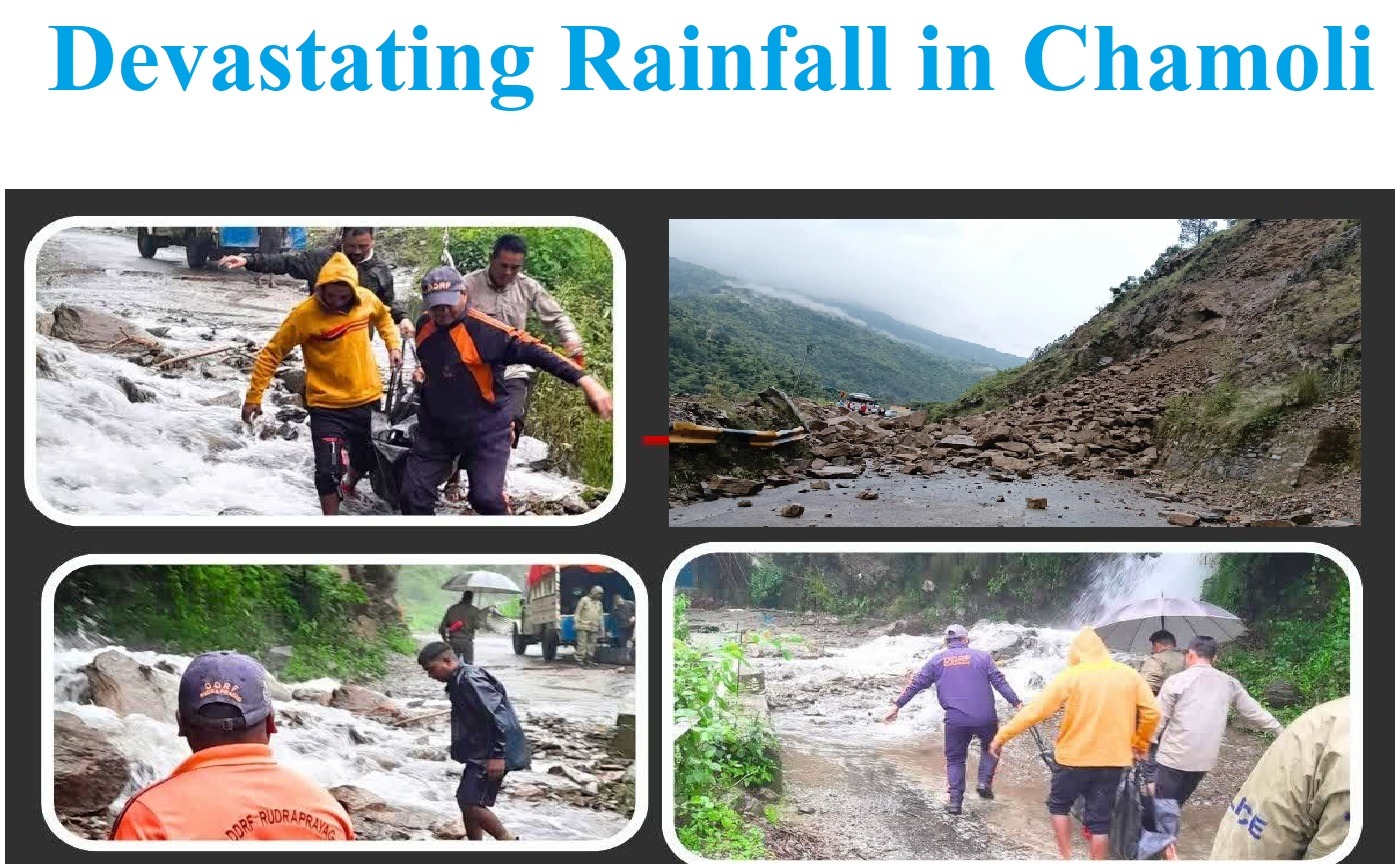
(NTI): The recent deluge in Chamoli district, Uttarakhand, has unleashed a wave of destruction that has left the region in turmoil. With heavy rainfall triggering landslides and floods, the local population is struggling to cope with the extensive damage to infrastructure, homes, and historical landmarks.
Highways Blocked, Transportation Paralyzed
The torrential downpour has caused severe disruptions to transportation, particularly on the Rishikesh-Badrinath National Highway. Landslides at multiple points, including Nandprayag, Chinka, Gulabkoti, Paglanala, and Kanchanganga, have rendered the highway impassable. This key route, vital for both locals and pilgrims, is now blocked, effectively cutting off several areas from the rest of the state. The halt in transportation has made it challenging to deliver essential supplies and support to the affected regions.
Ancient Shiva Temple Washed Away in Tharali
Among the most tragic losses is the destruction of a 200-year-old Shiva temple in Tharali. This ancient temple, a significant cultural and religious site, was swept away by the swollen Pindar River. The loss of this temple is deeply felt by the local community and marks a significant blow to Uttarakhand’s rich cultural heritage.
Flooding and Landslides Hit Jyortimath
In Jyortimath’s Singh Dhar ward, the situation has been equally dire. Streams swollen by relentless rainfall have burst their banks, flooding homes and forcing residents to flee in the middle of the night. Earlier signs of instability, such as the collapse of pedestrian pathways, foreshadowed the severe flooding that followed. The streets, once peaceful, have turned into rushing torrents, displacing many residents and causing significant distress.
Rising River Levels Force Evacuations
The surging waters of the Pindar and Pranmati Rivers have prompted local authorities to issue urgent evacuation orders for those living along the riverbanks. The rapidly rising water levels posed an imminent threat to these communities, and swift action by the administration helped prevent further tragedy. However, with the rivers continuing to rise, the situation remains precarious.
Structural Damage and Infrastructure Collapse
The collapse of a steel girder footbridge over the Harni-Boragad stream in the Deval Block has added to the woes of the local population. This bridge was a crucial pedestrian link, and its destruction has left residents isolated and without access to essential services. Additionally, the flooding has caused severe damage to both the Saraswati Shishu Mandir and the Betaleshwar Temple, further exacerbating the challenges faced by the community.
Agricultural Lands Ravaged by Floods
The agricultural lands along the Pindar River have been severely affected by the floods. Vast tracts of farmland from Tharali to Ratgaon have been eroded, devastating the livelihoods of local farmers. The loss of fertile soil and crops is a significant setback to the region’s economy and threatens food security in the area. For many farmers, the road to recovery will be long and uncertain.
Government Response and Relief Operations
In response to the disaster, the local administration has mobilized all available resources to aid those affected. Teams from the police, revenue department, and State Disaster Response Force (SDRF) are working tirelessly to assess the damage and ensure the safety of residents. District Magistrate Mayur Dixit has ordered an immediate survey of the affected areas to prioritize relief efforts and expedite recovery.
Challenges Ahead and the Path to Recovery
Despite the ongoing relief efforts, the road to recovery is expected to be long and difficult. Restoring blocked highways and re-establishing connectivity are top priorities, but the persistent rainfall is hampering progress. The emotional and psychological toll on the affected population is immense, as they grapple with the loss of their homes, livelihoods, and cultural landmarks.
The destruction of the ancient Shiva temple in Tharali serves as a poignant reminder of the vulnerability of cultural heritage in the face of natural disasters. Rebuilding the district’s infrastructure and preserving its cultural sites will require not only immediate action but also long-term planning and investment. The resilience of the local population will be crucial as they navigate the challenges ahead and work towards rebuilding their lives.

